
Ceiling water damage repair in Friendswood, TX
A ceiling stain tells you where to look before it tells you what to fix.
Emergency Line(832) 447-619924/7 emergency line. Free estimates from local pros.
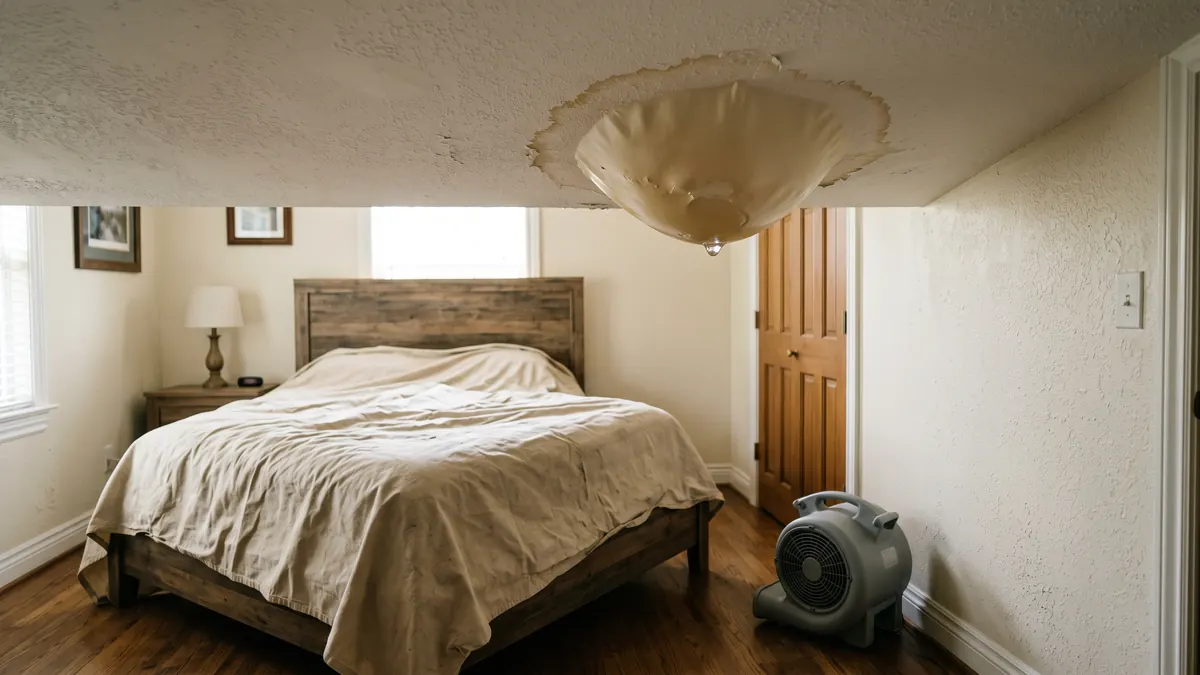
Ceiling water damage repair in Friendswood starts with a question, not a hammer: where is the water actually coming from? A stain or a soft spot overhead is a clue before it’s a repair job. Find the source first. The fix underneath it is usually the easy part.
Four places the water could be coming from
The water staining your ceiling usually starts in one of four places. A roof leak lets rain past shingles, flashing, or a vent boot during a storm. If wind tore at the roof, storm damage cleanup sifts through how that changes your claim.
An attic air handler can drip through a clogged condensate line, the AC’s own drain, for days before a stain ever shows below it. The AC condensate overflow guide traces that path from the coil to your ceiling in full. A bathroom on the floor above can leak at the tub, the shower pan, or the toilet flange. And a supply line hidden in the attic can weep onto insulation long before a drop of water ever shows.
What the stain is doing matters more than its color
A dry ring with a hard edge is usually old news. Water reached that spot once, dried, and stopped moving. A patch that keeps spreading, or a spot that feels cool and soft under your fingers, means the source is still feeding it. Check it again in a day. If the edge moved, so did the water.
A fresh coat covers the stain, not the water behind it
Painting over a ceiling mark feels like progress. It isn’t, unless the source behind it is actually stopped and dry. Paint that goes on too soon blisters again in a few weeks, and now you’re repainting drywall that’s been wet twice instead of once. Confirm the leak is fixed first. The color can wait.
The insulation gets wet before the paint ever shows it
By the time a stain shows up in the paint, the insulation overhead has already been wet longer than the paint lets on. Wet insulation loses its ability to hold heat back, and it gets heavy enough to press down on the drywall underneath it. A small stain on the surface can mean a bigger wet patch than it looks like from the room below.
Sometimes the ceiling has to come down to dry right
Stop the leak the same day and a damp ceiling can often dry in place while fans and a dehumidifier run below it. A section that’s been wet longer, or one that’s already sagging, usually needs to come out so the space above it can dry all the way through. Water damage repair traces that patch-versus-replace call, which follows the same logic wherever drywall gets wet.
A slow drip and a sudden failure land differently on a claim
A ceiling stain that shows up all at once, from a burst line or a storm, usually reads as a sudden accident. That’s the kind most standard policies pay for. A stain that grew over weeks, unnoticed until the paint darkened, draws more questions. It can look more like upkeep you skipped than a sudden loss. Which side yours falls on depends on your policy, and how well you can show the timeline. Treat this as the general shape, not a promise.
A stain is a gauge
A stain doesn’t tell you how bad the leak is by itself, but two details help every call: which room sits above the mark, and about when you first noticed it. Have those two ready. The rest gets sorted out from there.
Common questions
Should paint wait until the leak's confirmed fixed?
Yes. Paint covers the mark, not the cause. If the source isn't actually stopped and dry, the same spot usually comes back within a few weeks, and now you're painting over drywall that's been wet twice. Confirm the leak's done first.
How do I know if the ceiling is actually about to come down?
Watch for sagging, or a soft spot that gives a little when you press it lightly. That means water's sitting heavy right above the drywall, not just marking it from before. Stay out from under that spot, and treat it as urgent, not something to watch and wait on.
In a rental, is this the landlord's problem or mine?
Usually the landlord's, since a ceiling and the roof or plumbing above it are part of the structure, not your belongings. Tell them the moment you spot it. Waiting can turn a small landlord repair into a bigger dispute over who pays for what got ruined underneath.
Related pages
Appliance leak cleanup
A leaking water heater or appliance line can soak a floor for days before anyone notices.
Learn more →Burst pipe cleanup
A burst pipe floods fast, and insurance usually treats it as sudden, accidental damage.
Learn more →Commercial water damage
For a business, the closed sign costs more than the water that caused it.
Learn more →Emergency water removal
What happens in the first hour after water hits your floor decides how much of your house you get to keep.
Learn more →Talk to a local pro now
We answer 24/7. One call gets a Friendswood crew moving on your water damage, with a free estimate and help with your insurance claim.
Emergency Line(832) 447-6199Free estimates. No obligation to hire.